Slips, Trips, and Falls Prevention
Slips, trips, and falls are one of the most common causes of workplace injuries in Nova Scotia. They happen in every sector, at any time of year, and often result in serious harm. By knowing the risks—and taking simple steps to control them—you can prevent many of these injuries before they happen.
Why prevention matters
Slips, trips, and falls have a major impact on workplaces across the province. Each year in Nova Scotia:
- About 1,300 workers are hurt seriously enough to require time away from work
- These injuries result in more than 8,000 days lost
- Claims cost more than $9 million in benefit payments
- The average time-loss claim results in about 74 days off work
These injuries are preventable. Good housekeeping, clear procedures, and daily attention to hazards can protect your workers and reduce costs to your workplace.
Where slips, trips, and falls are most common
These injuries occur in nearly every industry, but are especially common in:
- Retail, grocery, and food service
- Health care and long-term care
- Manufacturing and warehousing
- Construction and trades
- Transportation, delivery, and logistics
- Hospitality and accommodations
Common causes include wet floors, uneven surfaces, poor lighting, cluttered walkways, improper footwear, snow and ice, and rushed or distracted movement.
How to prevent slips, trips, and falls
As an employer, you set the tone. How you maintain your workplace, train your team, and respond to hazards makes a major difference in preventing injuries.
Key steps include:
- Keep floors clean, dry, and free of clutter
- Fix uneven flooring and loose tiles promptly
- Improve lighting in stairways, hallways, and outdoor areas
- Ensure proper footwear for the work environment
- Remove snow and ice, and apply salt or sand
- Manage cords, hoses, and equipment in walkways
- Use proper ladders and maintain 3 points of contact
- Keep stairs in good condition, and ensure handrails are secure
- Store tools and materials properly, so they do not create tripping hazards
- Plan for seasonal changes, including adjusting outdoor lighting and monitoring for early frost
- Train workers regularly and reinforce safety expectations
For more detailed guidance, download the Preventing Slips, Trips and Falls at Work checklist (PDF). It’s a practical tool you can use during inspections, training, and day-to-day hazard control.
Injuries that can result from slips, trips, and falls
A slip or fall can cause many types of injuries. The 2 most common are:
Musculoskeletal injury (MSI)
MSIs include strains, sprains, and injuries to muscles, tendons, ligaments, and joints. These injuries can happen when a worker tries to stop a fall or twists their body unexpectedly.
Back injury
Falls often result in sudden impact, twisting, or overexertion. This can lead to back injuries ranging from mild to severe.
Learn more about preventing back injuries.
Resources
Use these tools to help raise awareness and prevent slips, trips, and falls in your workplace.
Risk Mapping Tool
A practical tool to help you identify, assess, and control hazards. Use it for inspections, safety meetings, or job-specific reviews.
Workplace video screen graphics and videos
Use these materials as reminders to display on screens, during safety meetings, or in common areas.
Videos
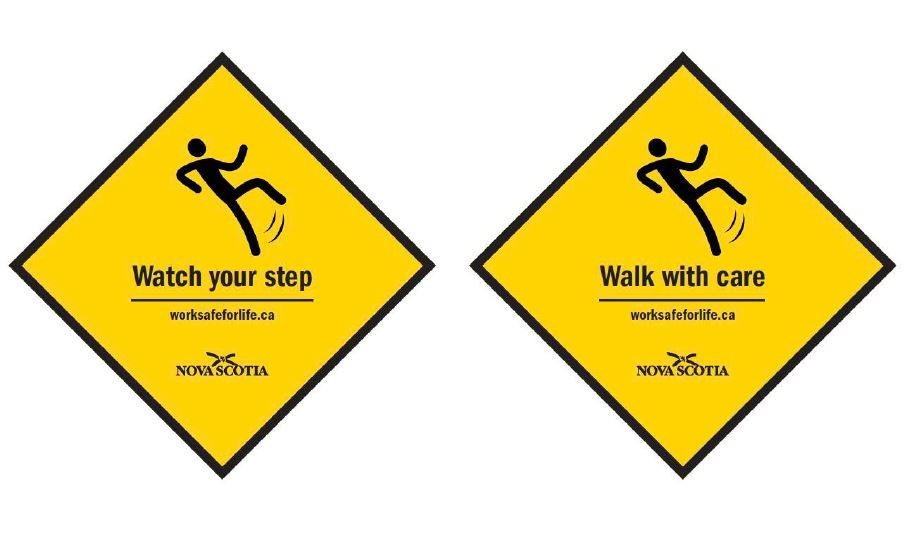
Posters and decals
Workplace reminders help reinforce safety expectations throughout the year. Download and print or request printed versions of these awareness tools.
Email us at info@wcb.ns.ca to order.
Decals
Slips and falls video
Watch this short entertaining video on preventing slips, trips, and falls in your workplace.